
As a former Oracle Fusion Middleware team member, I would outline middleware and integration methodologies and tools during past two decades.
I authored Enterprise Integration in a Nutshell before, which explains how middleware supports enterprise integration. Middleware covers application servers, ESB, SOA, and API design. A typical 3-tier setup is common in SOA. It includes a front end, business logic on the app server, and a back-end database. This pattern helps organize systems and data flows.
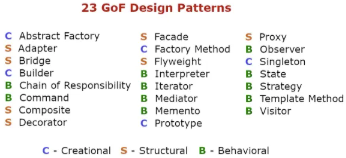
Design patterns apply to both 3-tier and multi-tier development. Additionally, creational, structural, and behavioral patterns guide these layers. Model view controller (MVC) is used in large 3-tier apps. This approach supports scalable, reusable software components across teams. It also aligns with governance and security goals.
Thus, in Middleware and Integration, developers aim for reliable communication and clear responsibilities. Following these practices reduces complexity and improves maintainability. Teams can reuse modules across projects. This reduces delivery time and errors. Good naming and clear interfaces speed maintenance and onboarding.
API management is for governance, policy enforcement, security, proxy, routing and protocol conversion. It provides development and management portals. The management portal handles API registration, lifecycle management, policy, and API catalogs. Enterprise Integration: API Management Vendors Landscape lists vendors in this area.
MuleSoft Anypoint is a bold contributor in this area. IBM Cloud Pak, Dell Boomi, Oracle API Manager, and Microsoft Azure API Management are also important players.
Toolbox:
- Development: Eclipse, MuleSoft, Spring Boot, Visual Studio
- Application Server: JBoss, WebLogic
- Continuous Integration: GitHub, GitLab, Maven, Sonatype Nexus, Jenkins
- Continuous Deployment: Sonatype Nexus, Jenkins, Docker, Kubernetes
- Automated Testing: Playwright, Selenium, OpenCV
- Release Management: Sonatype Nexus, Jenkins
- App Performance: AppDynamics
- Load Testing: JUnit, HP Loadrunner
- Infrastructure as Code: Terraform, Bicep
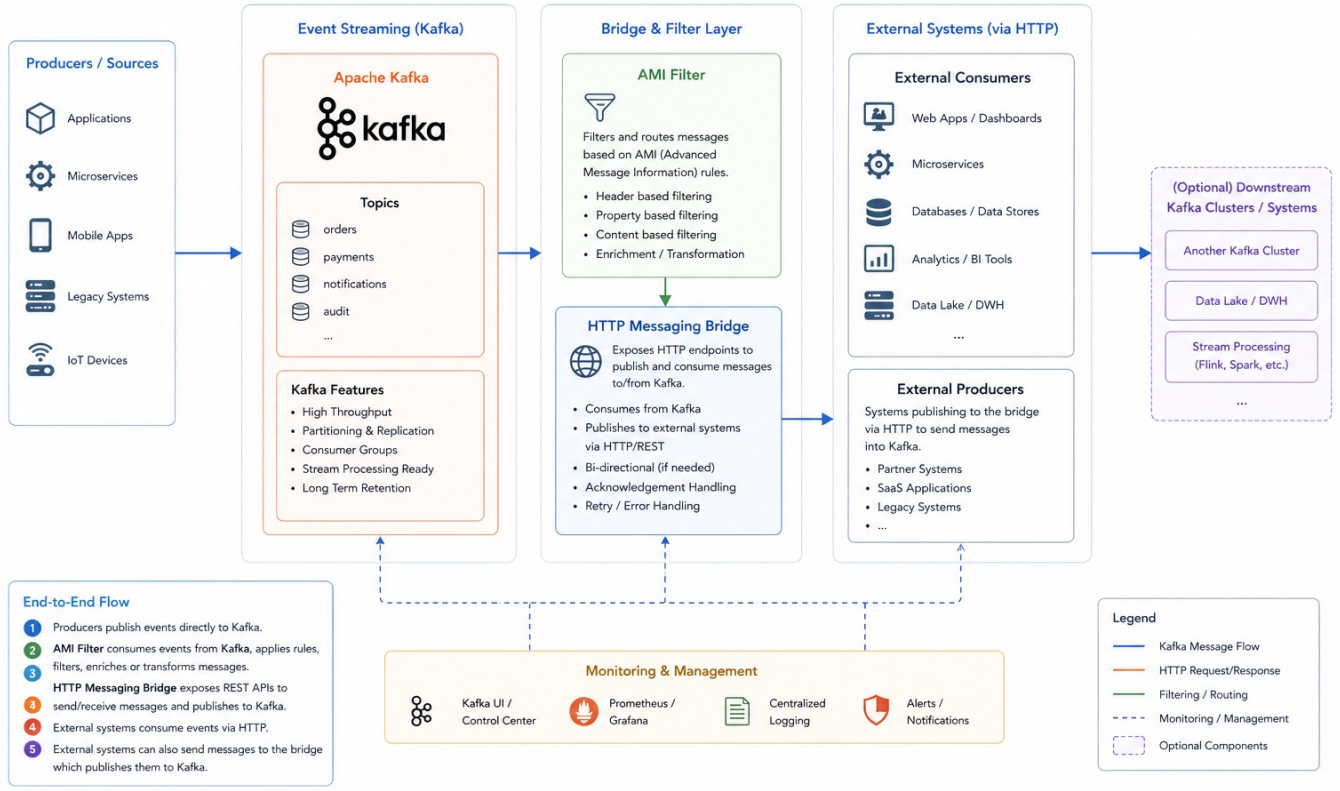
Microservices architecture was developed to meet large-scale application development demands. Producers can be applications, mobile, or IoT devices, creating diverse data streams. This approach enables modular teams and independent feature releases. Effective event handling is essential for reliable communication.
Kafka handles events and streaming for these services. It supports durable messaging and real-time data flow. Using Kafka reduces coupling between services and improves resilience. The core principles include domain-driven design and loose coupling. They also emphasize independent deployment and decentralized ownership.
Middleware and Integration enable consistent deployment and management across environments. Microservices applications can be container-based, using Kubernetes or implementations like RKE2. These setups support deployment on-premises or in the cloud. Container orchestration simplifies updates and scaling for diverse workloads.
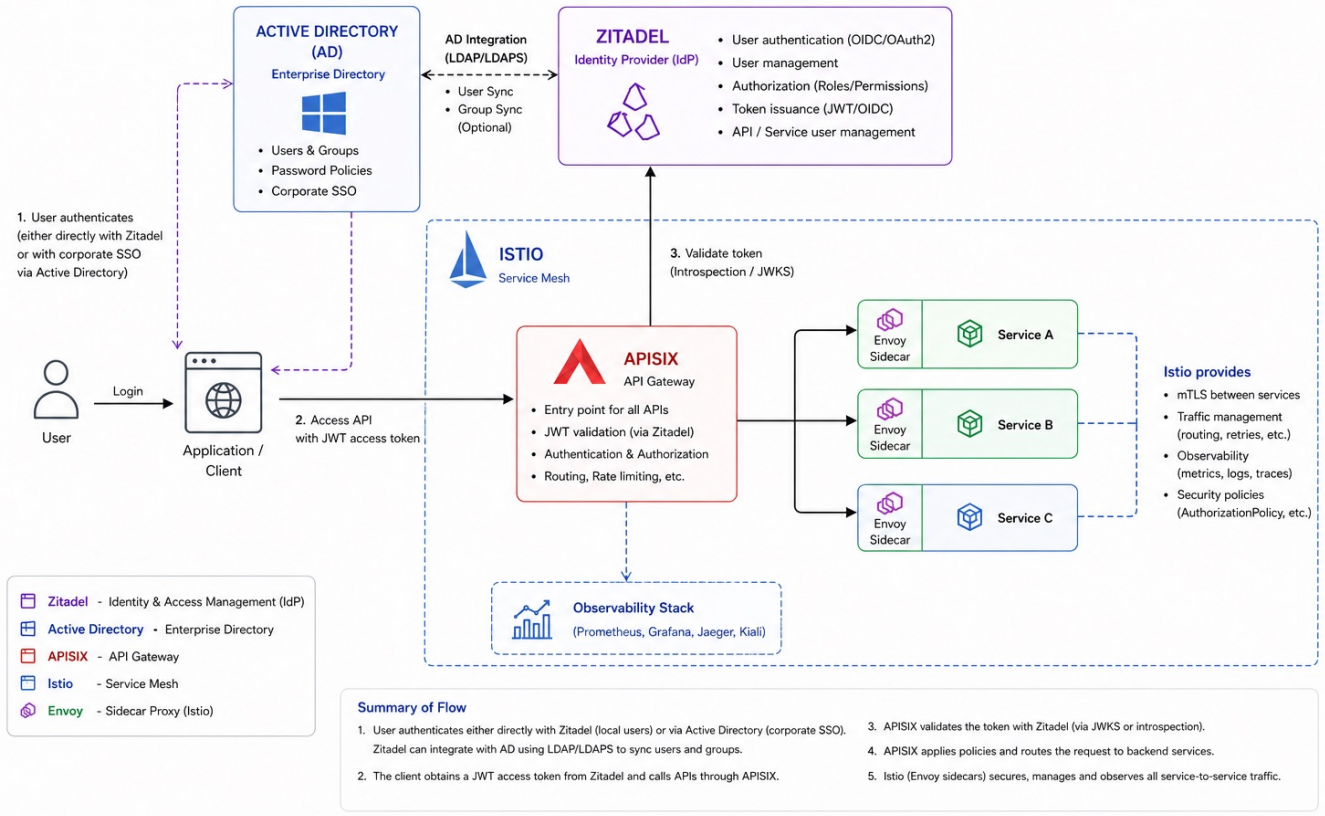
Microservice DevOps involves several tools listed in the toolbox above. It includes IDE, GitHub, Jenkins, Nexus, Argo, and others. In following diagram, Zitadel is the identity provider (IdP) and provides a cloud-native IAM platform. Apache APISIX provides API gateway functions, including routing, security, traffic, and observability. Active Directory (AD) is the enterprise directory. Istio provides the service mesh, handling common lower-level tasks such as log handling and secure communication.
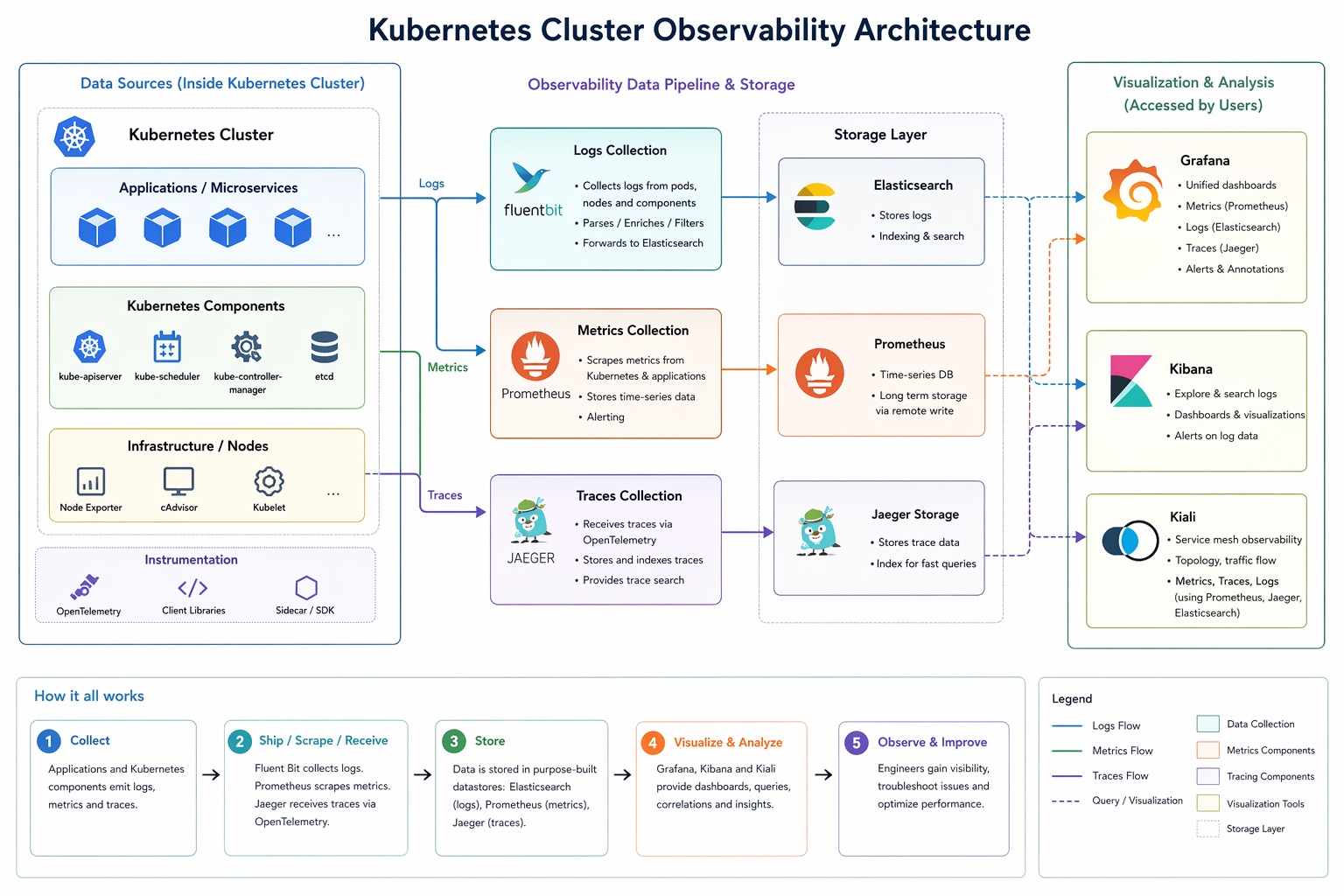
Developers who work with middleware or microservices know tracing errors is hard. This difficulty drives the need for strong observability. Kubernetes cluster observability helps tool selection for issue tracking, enabling teams to identify root causes faster and with greater confidence.
The diagram below shows observability tools available in a Kubernetes environment, including Fluent Bit, Prometheus, Jaeger, Elasticsearch, Grafana, Kibana, and Kiali. These tools support metrics, tracing, logs, and dashboards to improve visibility. Administrators can mix components to fit apps running on Kubernetes.
Lionsgatesoft consultant has rich experience in enterprise integration, enterprise architecture, road map design and development. Should you have any questions, please feel free to contact us.